Faith • Endurance • Purposeful Action
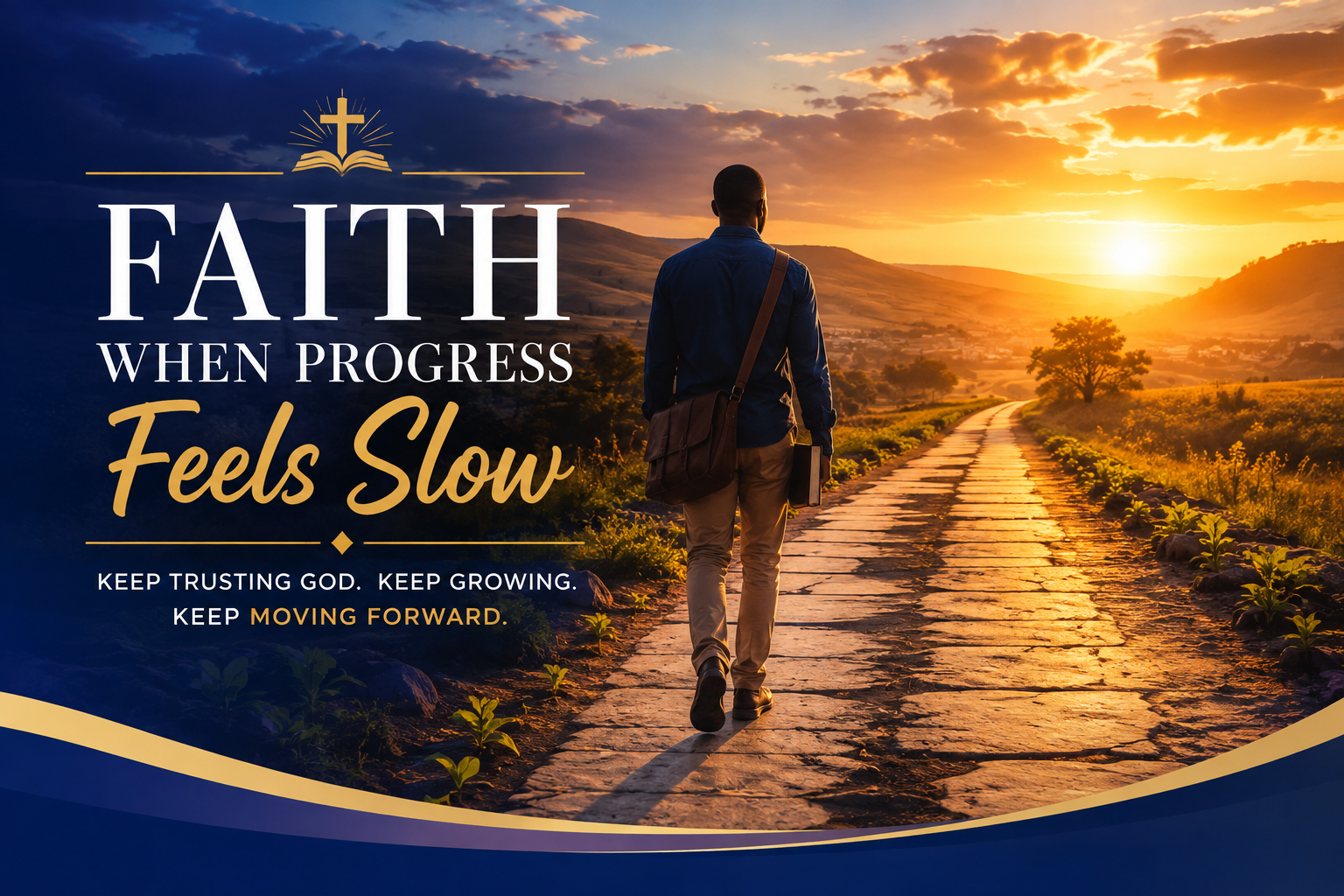
Faith When Progress Feels Slow: How to Keep Trusting God and Moving Forward
Biblical encouragement and practical steps for trusting God, recognising small beginnings and continuing faithfully.
Faith when progress feels slow is tested in the ordinary spaces between prayer and visible change. You may be doing the right things, honouring your responsibilities, seeking God sincerely and still wondering why the answer has not arrived. A delayed result can make a faithful person question whether anything is happening at all.
Scripture does not pretend that waiting is easy. It shows people who received promises, walked through uncertainty and learned that God can work deeply before He works visibly. The quiet season is not necessarily an empty season. It may be forming endurance, clarifying motives, strengthening character and preparing you to carry what you have asked to receive.
This article offers biblical encouragement and practical steps for continuing faithfully. It is general Christian education and encouragement, not a promise that every desired outcome will happen on a preferred timetable.
Why Faith When Progress Feels Slow Becomes Difficult
Slow progress creates tension because we usually measure movement by what we can see. We notice the unanswered email, the small audience, the delayed opportunity, the unresolved family matter or the goal that remains far away. God may be strengthening roots while we are looking for fruit.
Habakkuk 2:3 (NKJV) presents vision in relation to an appointed time. The passage does not encourage passivity. It calls for patient confidence in God while the faithful person remains responsible. Delay should not automatically be interpreted as denial, abandonment or failure.
It also helps to distinguish a season of waiting from avoidable stagnation. Sometimes progress is slow because growth requires time. At other times, a neglected conversation, weak habit, missing skill or repeated poor decision needs correction. Mature faith asks both spiritual and practical questions: What must I trust God with, and what must I faithfully do next?
God Often Develops the Person Before Expanding the Assignment
Joseph carried a God-given dream long before he entered public responsibility. David was anointed before he occupied the throne. Moses spent years outside Egypt before leading Israel. Their stories are different, but each shows that preparation can take place away from public recognition.
When faith when progress feels slow is anchored in God’s character, the hidden season becomes more than a frustrating delay. It becomes a place of formation. You learn whether your obedience depends on applause, whether your character can carry influence and whether you can serve faithfully before outcomes validate your effort.
Ask a better question than, ‘Why is nothing happening?’ Ask, ‘What is God developing in me while I wait?’ He may be developing patience, skill, financial discipline, humility, discernment, compassion or the ability to work consistently without immediate reward.
Do Not Confuse a Small Beginning with an Insignificant Future
Zechariah 4:10 warns against despising the day of small things. Small beginnings can feel unimpressive, especially when you compare them with another person’s mature results. Yet every strong ministry, business, relationship, career or disciplined life begins with actions that appear ordinary.
A few readers can be the beginning of a meaningful body of work. One paying client can test and strengthen a professional service. A single reconciled conversation can begin repairing a relationship. One week of disciplined spending can interrupt a harmful financial pattern. Small does not mean meaningless.
Protect early progress from contempt. Record what has improved. Thank God for each sign of movement. Then strengthen the structure that can sustain growth. Gratitude and honest measurement work well together: gratitude recognises grace, while measurement identifies the next responsible step.
What to Do When Faith When Progress Feels Slow Is Being Tested
Galatians 6:9 (NKJV) teaches believers not to grow weary while doing good. The instruction recognises that weariness is real. The answer is not forced excitement; it is renewed strength, clear priorities and continued obedience.
First, return to what God has already made clear. When you do not know the whole path, obey the next sound instruction. Pray. Tell the truth. Finish the assigned work. Repair what you damaged. Honour your commitments. Seek wise counsel. Faithfulness in the known prepares you for direction in the unknown.
Second, reduce the size of the next step. Overwhelm often grows when you stare at the entire distance. Choose one action you can complete today: write one page, contact one qualified prospect, revise one budget category, study one chapter, apologise sincerely or take one healthy boundary seriously.
Third, review your evidence without letting it become your identity. Numbers can reveal whether an approach is working, but they do not define your worth. If an initiative is producing no fruit, prayerfully examine the message, audience, method, timing and execution. Faith does not require ignoring evidence; it requires responding to evidence without surrendering hope.
Fourth, build a rhythm of rest. Exhaustion can make a temporary delay feel permanent. Biblical endurance is not endless activity. Jesus welcomed withdrawal for prayer and rest, and wise stewardship includes caring for the body, mind, relationships and responsibilities God has entrusted to you.
Keep Trusting God Without Becoming Passive
Faith and action are not rivals. James 2 teaches that living faith expresses itself through action. Prayer should shape responsible movement, not replace it. If you are praying for employment, strengthen your application and skills. If you are praying for business growth, clarify the value you offer and follow up suitable opportunities. If you are praying for financial stability, practise budgeting, restraint and honest recordkeeping.
This is where faith when progress feels slow becomes practical. You continue to trust God while taking actions consistent with wisdom and integrity. You do not manipulate outcomes, exaggerate achievements or force doors that require compromise. You remain available, prepared and faithful.
Hebrews 10:36 (NKJV) connects endurance with doing the will of God. Endurance is therefore purposeful. It is not merely surviving time; it is continuing in faithful alignment while waiting for the result that belongs to God.
Guard Your Mind During a Slow Season
Slow seasons attract destructive interpretations: ‘I have been forgotten,’ ‘I will never change,’ or ‘Everyone is moving except me.’ These thoughts may feel convincing, but they should be tested rather than automatically believed.
Renew your mind with truth. Recall previous evidence of God’s faithfulness. Limit comparison that produces envy or despair. Speak honestly with trusted believers. Keep a short record of answered prayers, lessons, completed actions and emerging opportunities. This does not manufacture optimism; it protects perspective.
When discouragement becomes persistent or seriously affects daily functioning, seek appropriate support from a qualified professional or trusted pastoral leader. Christian encouragement can support wellbeing, but it should not replace necessary medical or mental-health care.
A Seven-Day Practice for Faith When Progress Feels Slow
Use the following seven-day reset when discouragement begins to weaken your consistency:
- Day 1 — Name the discouragementWrite down what feels delayed and the story you have attached to it. Separate verified facts from fearful assumptions.
- Day 2 — Revisit the promise and the principleRead the relevant Scriptures in context. Identify what God promises and what obedience or wisdom the passage requires.
- Day 3 — Complete one neglected actionChoose a task that is within your authority and finish it before opening another project.
- Day 4 — Ask for wise perspectiveSpeak with a mature, trustworthy person who can encourage you and challenge blind spots.
- Day 5 — Measure honest progressReview completed work, habits, conversations and results. Record what is working, what is not and what must change.
- Day 6 — Rest without guiltCreate protected time for worship, rest and healthy relationships. Let your soul recover from constant performance pressure.
- Day 7 — Commit the next week to GodChoose three realistic priorities, pray over them and schedule the first actions.
At the end of seven days, do not demand a dramatic breakthrough as proof that the practice worked. Look for renewed clarity, steadier obedience, corrected priorities and one or two credible signs of movement. These are valuable forms of progress.
Choose Faithful Movement Today
You may not control the timetable, but you can choose how you respond today. Faith when progress feels slow does not deny disappointment. It brings disappointment into God’s presence, receives strength and returns to responsible action.
Do not despise the small step. Do not interpret silence as abandonment. Do not let another person’s visible season make you contemptuous of your own preparation. Keep praying, learning, correcting, serving and building with integrity.
The harvest belongs to God, but today’s faithful action has been placed in your hands. Take the next step with peace.
A Resource for Daily Christian Living
Continue with practical Christian living
For readers who want to move from inspiration into daily obedience, Faith in Action: A Practical Guide to Living the Christian Life Every Day by Elphas Sipho Mdluli is a relevant companion resource. The controlled catalogue describes it as guidance for moving beyond Sunday Christianity into practical Christian living across habits, relationships, work and faithful service.
View Faith in Action: A Practical Guide to Living the Christian Life Every Day on Amazon
The recommendation is educational and optional. No claim is made here about format, price, reviews or sales performance.
Your Freedom Hub Reader Pathway
Continue with verified Freedom Hub resources that support steady Christian growth:
Choose Faithful Movement Today
You do not need to solve the whole future today. Choose one clear, responsible action and take it with prayer, peace and integrity.
Explore Freedom Hub pathways