Faith-Based Financial Literacy
Faith-Based Financial Literacy helps believers steward money with biblical wisdom and steady structure—so finances serve life rather than control it.
This Freedom Hub pillar helps you build financial peace through order, discipline, integrity, generosity, planning, and wise stewardship.
What Is Faith-Based Financial Literacy?
Faith-based financial literacy is the practice of managing money under God’s wisdom—through stewardship, discipline, integrity, generosity, and planning—so finances bring stability rather than pressure.
This approach shifts financial thinking from ownership to stewardship, producing intentional choices that honour God, strengthen households, and support purpose-driven living.
Ordered Life Reflection: 5-Minute Stewardship Check
This gentle self-assessment helps you identify your most helpful next step. It is not a test of worth—only a tool for clarity.
The Ordered Life Mandate for Financial Stewardship
Financial peace is rarely achieved by motivation alone. It is built through order, strengthened by discipline, sustained by stewardship, and protected by alignment.
Order before increase
Clarity and structure reduce anxiety and prevent financial drift.
Discipline protects destiny
Discipline is not harshness—it is protection. Small habits outlast emotional surges.
Stewardship is maturity
Money is an entrusted resource. Mature stewardship brings integrity and peace.
Alignment precedes expansion
Before you expand responsibilities, align priorities so growth does not become strain.
The Freedom Path
A simple, dignified path for steady progress—so you always know the next step.
Explore
Gain clarity through biblical financial wisdom and stewardship.
Begin
Track, plan, reduce impulsive spending, and give with wisdom.
Be Formed
Build consistent discipline, tools, habits, and accountability.
Stand
Maintain stability through aligned decisions and sustainable rhythms.
Influence
Use stewardship to strengthen family, community, and purpose-driven impact.
Biblical Principles of Money Stewardship
Stewardship over ownership
Resources belong to God; we manage responsibly.
Discipline and self-control
Habits shape outcomes and reduce chaos.
Integrity and honesty
Stewardship requires trustworthiness.
Accountability and planning
Wise structure sustains peace.
Generosity with wisdom
Giving is worship and stewardship, not pressure.
Contentment and purpose
Financial decisions are healthier when rooted in identity and calling.
Common Money Challenges Believers Face
Many believers struggle financially not because they lack faith, but because they lack structure, clarity, and consistent financial habits.
Overspending
Spending without boundaries often creates pressure and regret.
Poor planning
Lack of records and plans makes decisions reactive.
Inconsistent saving
Financial stability grows through small, repeated habits.
Practical Steps to Build Financial Peace
- Track income and expenses consistently because clarity reduces anxiety.
- Practise intentional giving with joy and wisdom.
- Reduce impulsive spending by setting clear boundaries.
- Build savings gradually through consistent habits.
- Make decisions aligned with values, not pressure or comparison.
Download the Free Financial Discipline eBook
Strengthen your financial stewardship with a practical, faith-based resource designed to help you build order, discipline, clarity, and peace in your money decisions.
- Reflect on money as a stewardship responsibility before God.
- Identify habits that weaken financial stability and spiritual focus.
- Take practical steps toward budgeting, saving, planning, and disciplined growth.
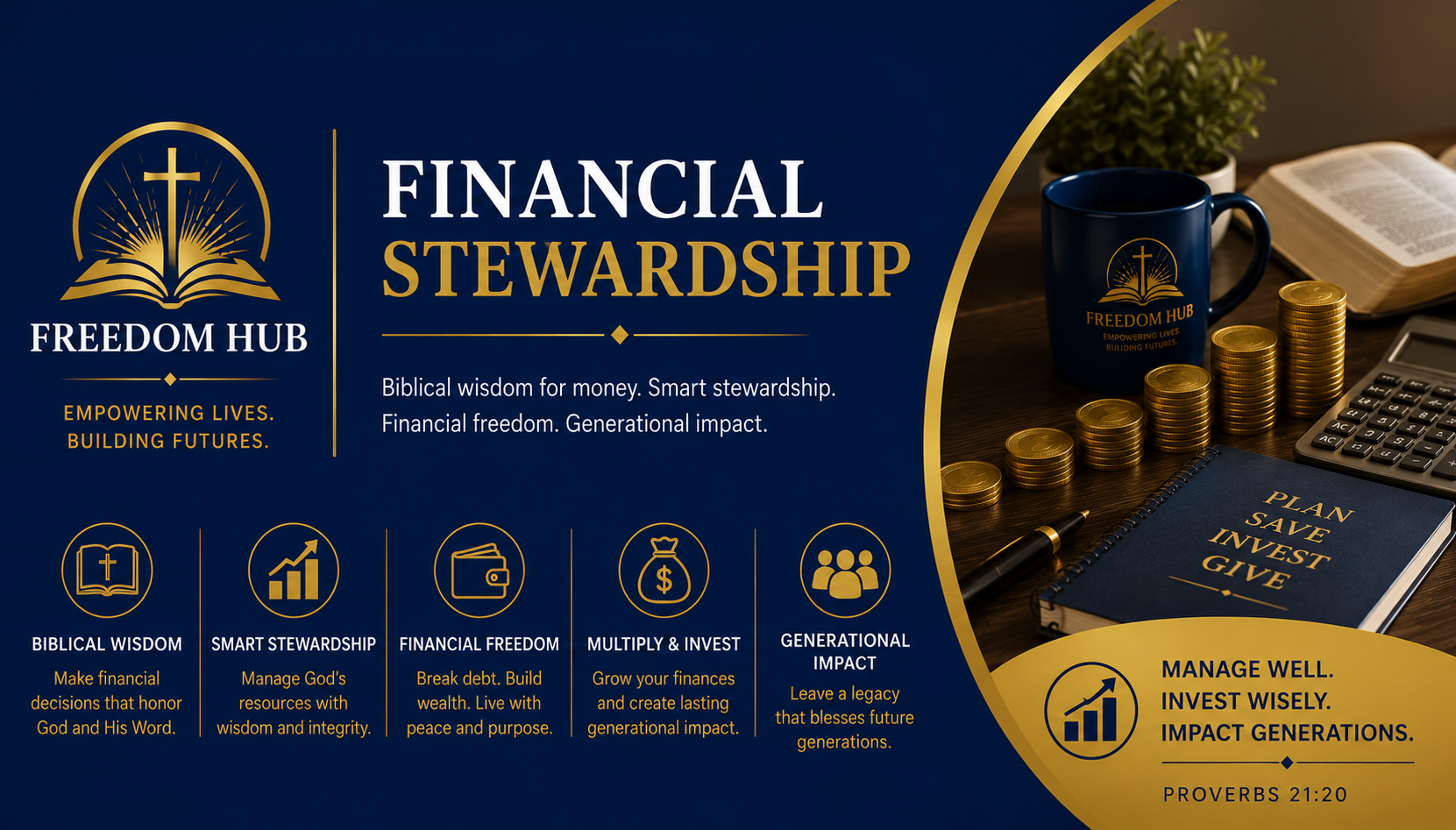
Faith-Driven Entrepreneurship and Business Stewardship
Faith-driven entrepreneurship is one practical expression of stewardship. Business becomes a platform for service, provision, and purpose—not self-promotion or unchecked profit.
Ethical leadership
Integrity, fairness, transparency, and accountability sustain trust.
Sustainable discipline
Good records, responsible spending, and wise planning protect growth.
Identity remains in Christ
Stewardship brings peace; identity-driven ambition brings pressure.
Questions About Faith-Based Financial Literacy
What is faith-based financial literacy?
Faith-based financial literacy is learning to manage money with biblical wisdom through stewardship, discipline, integrity, generosity, and planning.
What does the Bible teach about money stewardship?
The Bible teaches that money is a stewardship responsibility. God owns all things, and believers are called to be faithful managers.
How can I build financial discipline as a Christian?
Start with small consistent habits: track expenses, plan ahead, reduce impulsive spending, save gradually, and seek wise counsel.
What is a simple path for steady financial growth?
Gain clarity, begin with structure, build consistent habits, maintain alignment, and expand responsibly.
How can money issues affect marriage and family?
Money stress can increase conflict and reduce unity. Shared stewardship, transparency, and aligned priorities strengthen trust.
Take the Next Step in Financial Stewardship
Financial literacy is not only about knowing principles. It is about applying wisdom consistently through discipline, accountability, and stewardship for peace and stability.